
About the Mitigating Wildfire Initiative
Catalysing a Fire-Adapted Future
Catastrophic wildfire is reshaping Canada, from housing and health to biodiversity, climate, and the economy, it has become one of the defining issues of our time. Yet while Canada spends billions fighting wildfires each year, only a fraction goes toward preventing them.
What if we chose a different path?
What if prevention was something we built together, year-round, instead of something we only talk about in crisis?
What if we designed systems that made the right actions easier to take, not harder?
What if we invested in long-term resilience with the same determination we bring to emergency response?
What if people, communities, and ecosystems all stood to thrive in a future where we live with fire, not only fight it?
The Mitigating Wildfire Initiative (MWI) at Simon Fraser University exists to make that future real.
Launched in 2022, MWI fills a critical gap in Canada’s wildfire landscape. We bring policy, culture, and practice into alignment so that prevention becomes visible, fundable, and actionable.
Our Approach
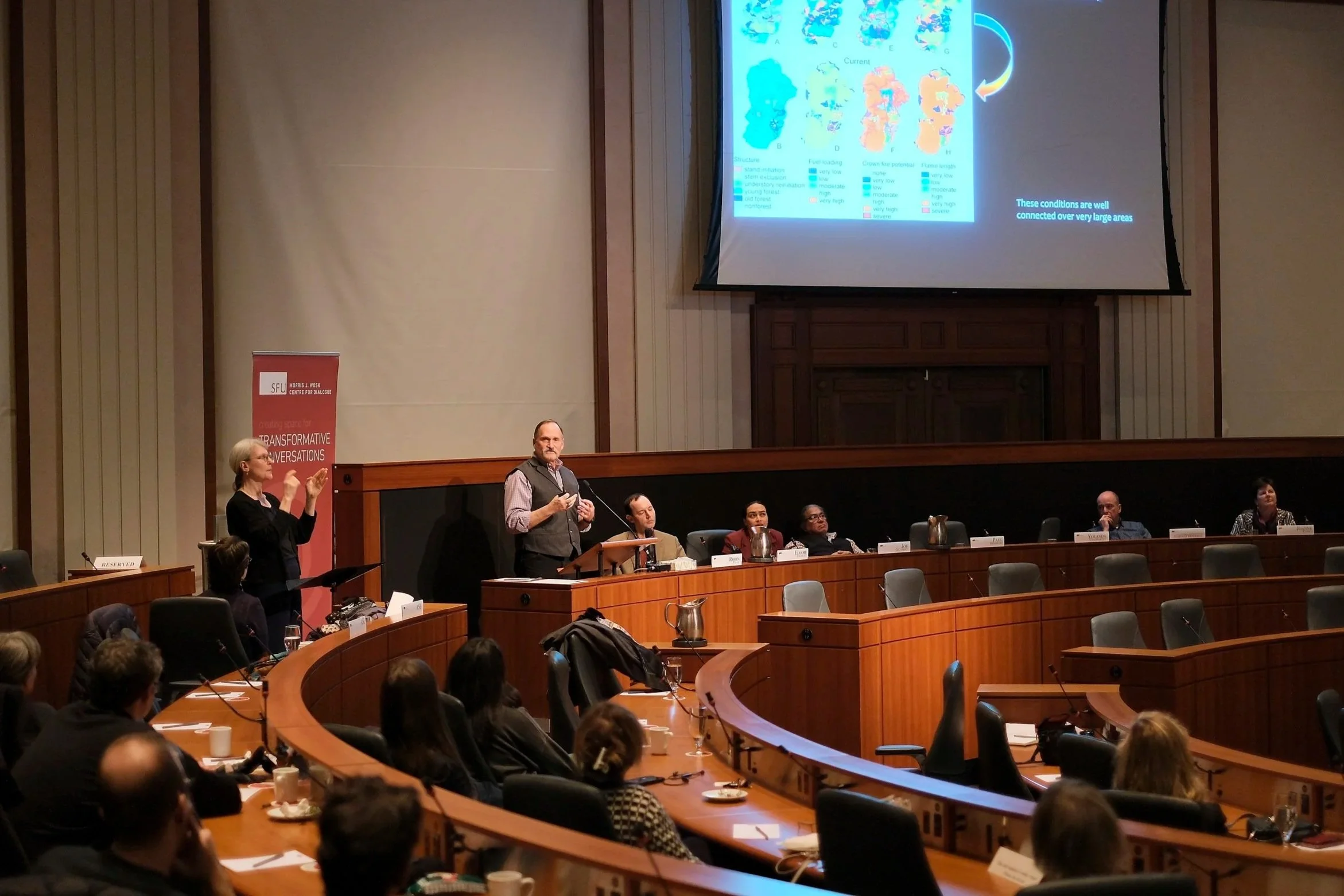
Prevention is relational work. As a trusted, independent convenor, we bring diverse actors together who do not always share space or a mandate. We create structured environments for collaborative learning and action—places to test ideas, build capacity, learn across experience and expertise, and co-create solutions that reduce risk before catastrophic fires can begin.
We start from the understanding that fire is both natural and necessary. It shapes ecosystems and societies, and it can teach us how to live responsibly with the land and with one another. Through dialogue, systems design, and coalition-building, we help de-risk collaboration, amplify proven solutions, and strengthen the human and institutional foundations of prevention.
By investing in relationships as deliberately as we invest in policy or technology, we build the trust that turns knowledge into action.
Our Mission
To prevent catastrophic wildfire by transforming how Canada works with fire—and with each other. By addressing the root social and governance drivers of risk, we build the trust and leadership needed to turn knowledge into action and shift Canada toward prevention.
Our Vision
A fire-adapted Canada where prevention is prioritized, collaboration is the norm, and relationships between people, land, and fire sustain healthy, resilient communities and ecosystems.
Our Principles
At MWI, we believe wildfire is both one of the defining challenges of our time and an invitation to build a safer, more resilient, and more just future.
As a trusted, independent convenor, we create principled and inclusive spaces where diverse voices come together to tackle complex challenges. These six principles guide how we convene, collaborate, and co-create the lasting solutions that no single sector can achieve alone.
-
Canada must rebalance its wildfire approach so prevention and mitigation stand on equal footing with suppression. Every dollar invested upstream saves lives, ecosystems, and communities. Addressing the social, cultural, and governance drivers of wildfire is essential to stopping disasters before they start.
-
Revitalizing Indigenous leadership, knowledge, and cultural fire practices at scale is critical for both resilience and reconciliation. Indigenous Fire Stewardship offers not only technical wisdom but a relational ethic for living well with fire.
-
Rural and urban residents alike must be active partners in prevention and resilience, not passive victims of disaster. Empowering communities through trust, agency, and shared decision-making is key to reducing preventable losses.
Our Goal
A Canada that learns from fire, not burns from it: resilient, connected, and fire-adapted.
-
Unchecked fires are now Canada’s largest and most immediate climate feedback loop. Reducing emissions from wildfire must be recognized as a national climate priority, and wildfire mitigation as a core climate solution.
-
Wildfire is necessary and natural, while catastrophic wildfire is not. Canada must reconfigure its relationship with fire: accept it as part of life in fire-prone landscapes, uphold the role of stewardship and good fire in restoring healthy ecosystems, and work to prevent root drivers of catastrophic fire.
-
We cannot stop fire, but we can stop disasters. Resilience grows when science, Indigenous knowledge, and local practice are translated into policy, leadership, and public will. Our collective task is to work towards no communities being lost to preventable wildfire.
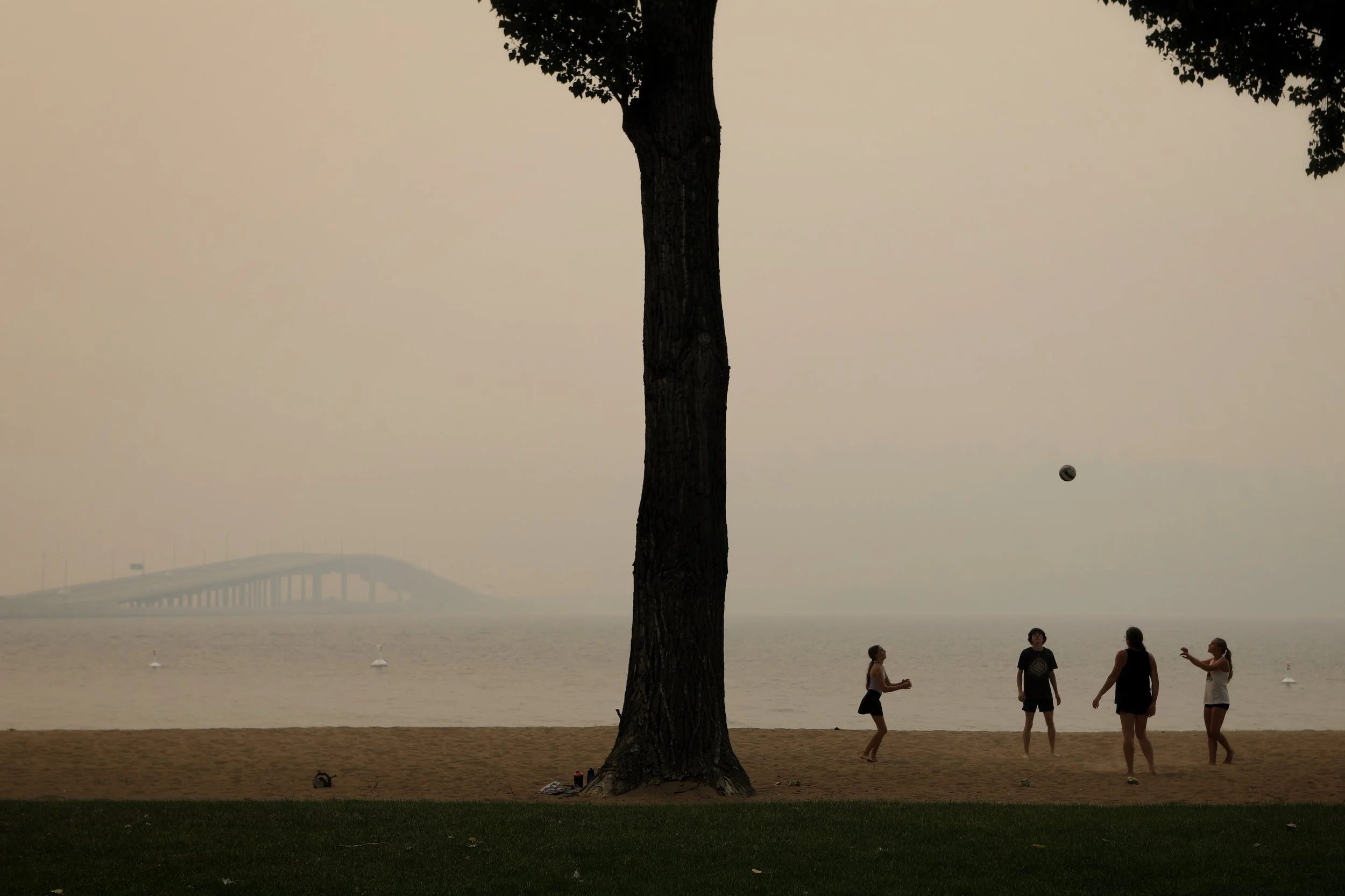
Photograph provided by photographer Aaron Hemens (Globe and Mail)
Why it Matters
Fire is no longer a natural event. It is a national turning point.
Catastrophic wildfire has become one of the defining forces shaping Canada’s future. Each year brings new records of longer seasons, larger fires, and smoke that reaches across provinces and oceans. The impacts are profound: communities displaced, critical infrastructure destroyed, and emissions from Canada’s 2023 fires alone exceeding those of the global aviation sector.
Catastrophic wildfires threaten more than communities or our forests. They burn through cultural heritage, ecological integrity, and the social bonds that make communities strong. Wildfire is Canada’s largest and most immediate climate feedback loop, and the leading disturbance on our landscapes—undermining conservation achievements, biodiversity, carbon sinks, and water security. The health consequences are equally far-reaching: respiratory illness, mental-health strain, and deep inequities in who bears the risk.
Despite this, investment still flows overwhelmingly to suppression, not prevention. MWI exists to change that. We bridge research, policy, and practice to help Canada navigate this new era of fire—bringing together the people, knowledge, and leadership needed to prevent catastrophic losses and support Canada in turning crisis into transformation.